Gnostic Invocation of the Sun
Among the vast legacy of Gnostic and Coptic texts, there are individual papyri that provide no instructions on how to apply the invocations and spells inscribed upon them.
In this article, I would like to recall two examples of short Coptic invocations. The papyrus from which I draw them is cataloged as P.Col. inv. 20826 (from the Cologne University Papyrus Collection) and dates to approximately the 6th century CE. The original 15 by 20 centimeter papyrus contains four very brief spells or invocations. All of them are addressed to solar powers. It remains unclear whether they were used in a single operation or were simply compiled together because they mention the Sun.
- It is recited over honey (ϵϧιω), invoking the blessing of the "Sun of Righteousness" (prϵ ɴϮkyeooγϵn), which rises "over the land of Egypt" (ϵϫɴ mpkaϩ ɴknmϵ).
- Invokes various spiritual forces.
- It contains a petition for the granting of various protective powers, including the "Solar Barque" (mpϫaι mprϵ).
- This appears to be a concluding incantation and invocation. Given that this papyrus text serves as the final entry in the cycle of invocations, it is highly probable that all four incantations were employed within a single ritual operation.
I will use the 2nd and 4th invocations as examples, as they are the richest in epithets and names of powers; naturally, I will provide the original spelling of these names within the document to ensure accurate reading.
The Second Conjuration
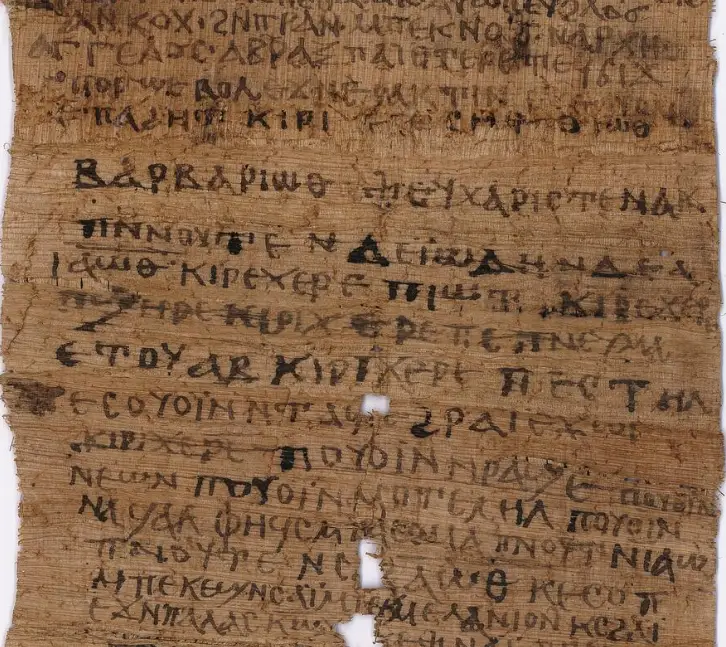
In the name of your great Archangel Abraxas [ἀρχάγγελος ἄβραξ], whose hand extends across his rays! Illuminate my heart!
I greet the Lords: Seth, Thiot, Barbarioth [σήθ θιόθ βαρβαριώθ]!
I thank you, my God, Deiodindea Iaoth [δειωδινδέα ἰαώθ]!
I greet the Lord Father!
I greet the Lord Son!
I greet the Lord Holy Spirit!
I greet the Lord of Radiance!
He has bestowed light upon me!
I greet the Lord of the light of joy, the light of the aeons, the light of my eyes, the lamp of my body, God Iao, God Sabaoth!
He has not written accusations with his ink upon my tongue!
Notes to the text:
In this text, the phrase "whose hand extends along its rays" alludes to the Sun's rays acting as its hands. We might recall, for instance, the famous depiction found on a fragment of a household altar.
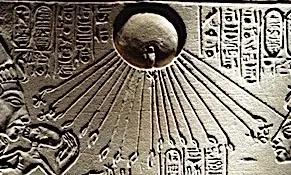
Domestic altar slab. 14th century BCE. Egyptian Museum, Berlin
While the translation may not make it immediately apparent, the Lord manifests at the end as the light of joy, of the aeons, and of the operator's eyes. This light of the operator's eyes is, in turn, the lamp of the operator's own body. The final sentence regarding the tongue is the only point of contention, as it allows for alternative interpretations. Nevertheless, the context supports the translation I have provided.
The Fourth Conjuration
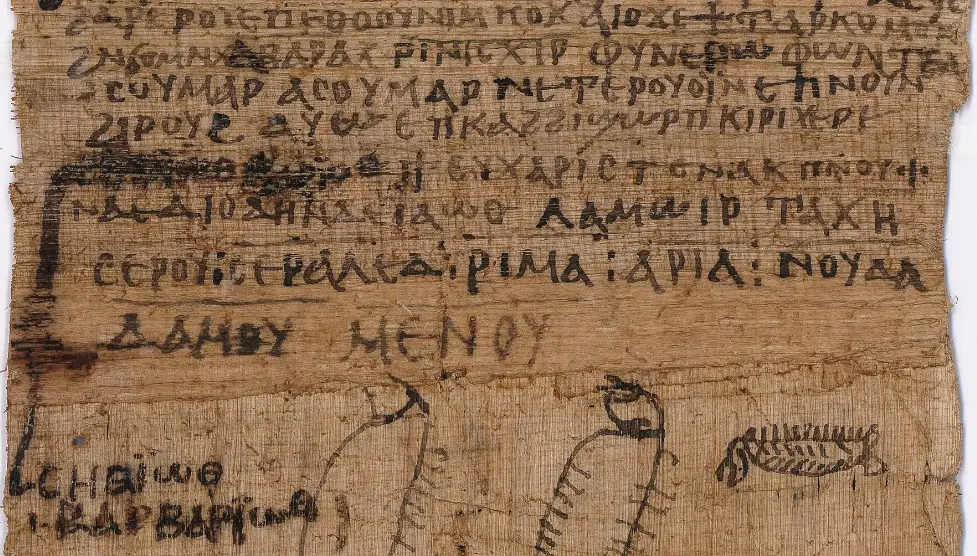
Aio, I conjure thee by the power of Khabarakh Rinishirfenero Fontea Asoemar Asoemar [χavaraχ rιɴιsχιrfγɴϵrω fωɴtϵλ asoγmar asoγmar], who illuminates the abyss in the evening and the earth in the morning.
I greet the Lord of the Sethiot Bariot [snѳιoѳ varιoѳ]!
Thanks be to thee, God Dediodindeiaot Lamoir Takhi Seroe Seraled Rima Aria Noeda Damoe Menoe [dϵdιodnɴdϵιaωѳ λamωιr taχn sϵroγ sϵroγ dϵdιodnɴdϵιaωѳ λamωιr taχn sϵroγ sϵraλϵd rιma arιa ɴoγda damoγ mϵɴoγ]!
Notes to the text:
In the fourth text, "Aio" (αιο) is not a name but a word that, much like the Hebrew "Selah" (סלה), signifies "forever." Below the final incantation, a distinct name appears: "Sethioth Barbarioth" (σηθιοθ βαρβαριωθ). This is likely a correction of the miswritten name "Sethioth Barioth." The complete form of this name is clearly visible in the second text.
Loading comments...
Sign into leave comments.